
Why I Gravitate Toward Slow-Cooked Food
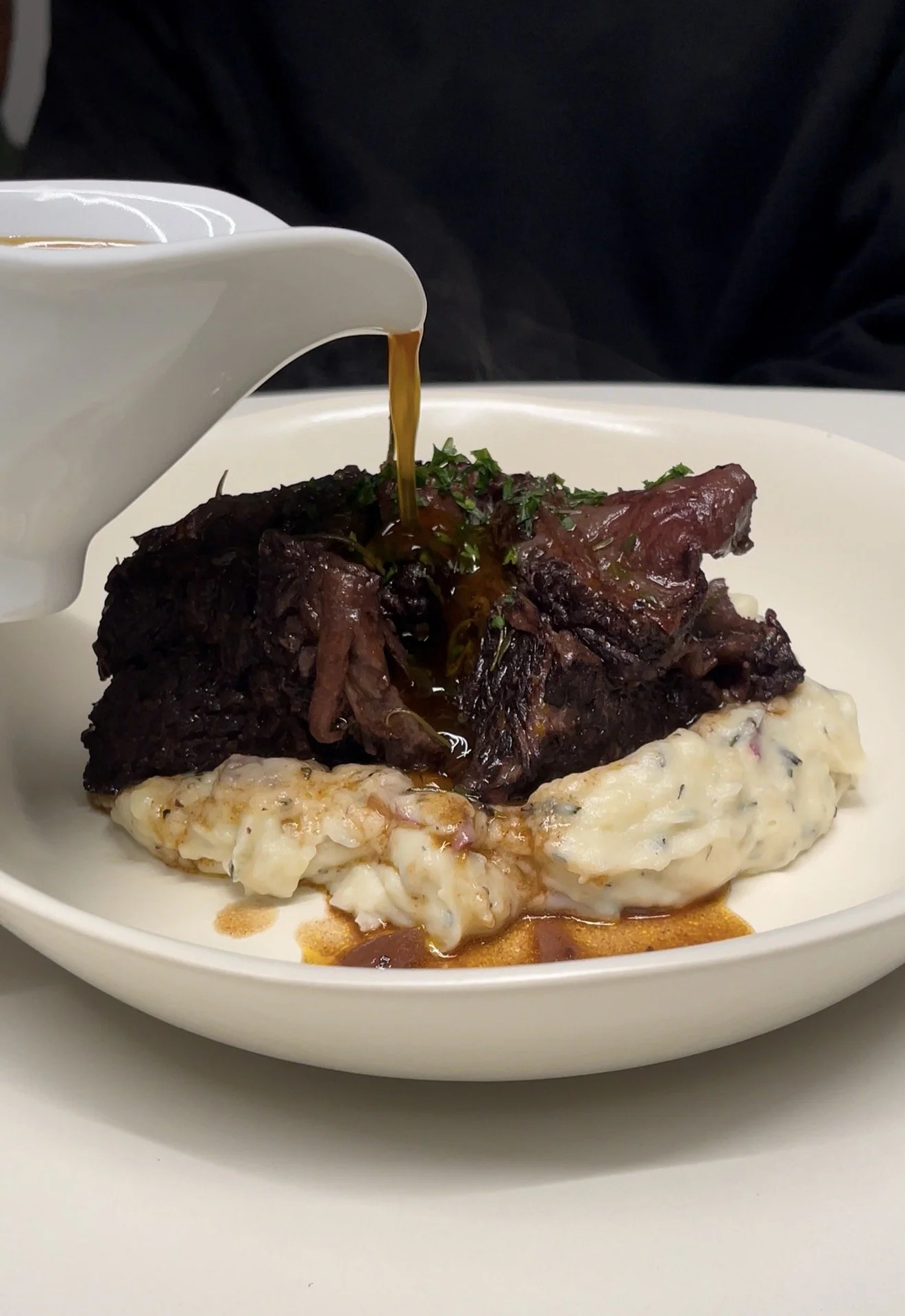
Braised short ribs served with mashed potatoes
I’ve noticed that most of my favorite meals are the ones that take a while to make. The ones that feel like a year-long college project or a work project that lives in the back of your mind for months.
Not because they’re complicated, but because they ask you to slow down.
Braised beef. Braised chicken. Salmon cooked gently in liquid. Beef bourguignon. None of these dishes are about speed. You can’t rush them and expect the same result. You kind of have to meet them where they are like someone you have a crush on, or like chess. You don’t force it. You play the long game.
What I like about braising is that the work happens in stages. You start active: cutting, searing, building a base. You’re engaged, making decisions. Decisions that actually matter like whether you’re going to enjoy the meal at the end, or whether this whole thing is going to feel like a missed opportunity.
Then at some point, the pot settles in. The lid goes on. And your job changes. You stop doing and start waiting.
That shift matters to me.
Once everything is simmering, there’s not much you can do except let time handle it. Checking constantly doesn’t help. It’s like waiting for a wound to heal if you keep picking at it, you just slow everything down (and yes, I’m talking about emotional wounds too). Turning the heat up doesn’t help either. You just wait and trust the process.
That’s something I don’t get from quick meals, no matter how good they are.
Braised beef is probably my favorite example of this. Tough cuts that don’t try to impress anyone. They need time. Time for the fat and connective tissue to break down, time for the flavor to actually move through the meat. When you give it that time, it turns into something completely different from where it started.
Braised chicken feels more familiar and comforting. Like a warm hug from your mom. Or a random older lady at the grocery store who compliments you and somehow means it. It’s not dramatic, but it’s steady. It fills the kitchen with smells you recognize immediately. You’re not chasing precision, you are building depth. It rewards consistency more than technique.
Even salmon benefits from slowing down. Most people overcook it because they’re trying to finish too fast. Cooking it gently forces you to pay attention. You have to pull it earlier than you think. You have to trust carryover heat. Knowing when to stop is part of the process.
Beef bourguignon really drives this home for me. Nothing about it is rushed. Wine, aromatics, time. At first, everything tastes separate. Then, slowly, it doesn’t. The dish doesn’t improve because you did more, it improves because you waited.
That’s the part I enjoy the most.
While something’s simmering, there’s space. You clean up. You sit down. You think. You debate whether breaking no contact is a terrible idea. You wonder if you should shoot your shot on Instagram or just leave it alone. You don’t feel pressure to constantly intervene. The waiting isn’t wasted time, it’s part of the meal, especially as the smells take over the kitchen.
I think that’s why I keep coming back to food like this. It reminds me that not everything needs to be fast to be good. Some things are better when you let them take as long as they need. The process isn’t something to push through, it’s the thing that makes the outcome worth it.
By the time the food is ready, you’ve already been part of it for hours. And that feels just as satisfying as the first bite. Like red beans and rice that are better the next day.
Or the first kiss after a really good first date. 🙂